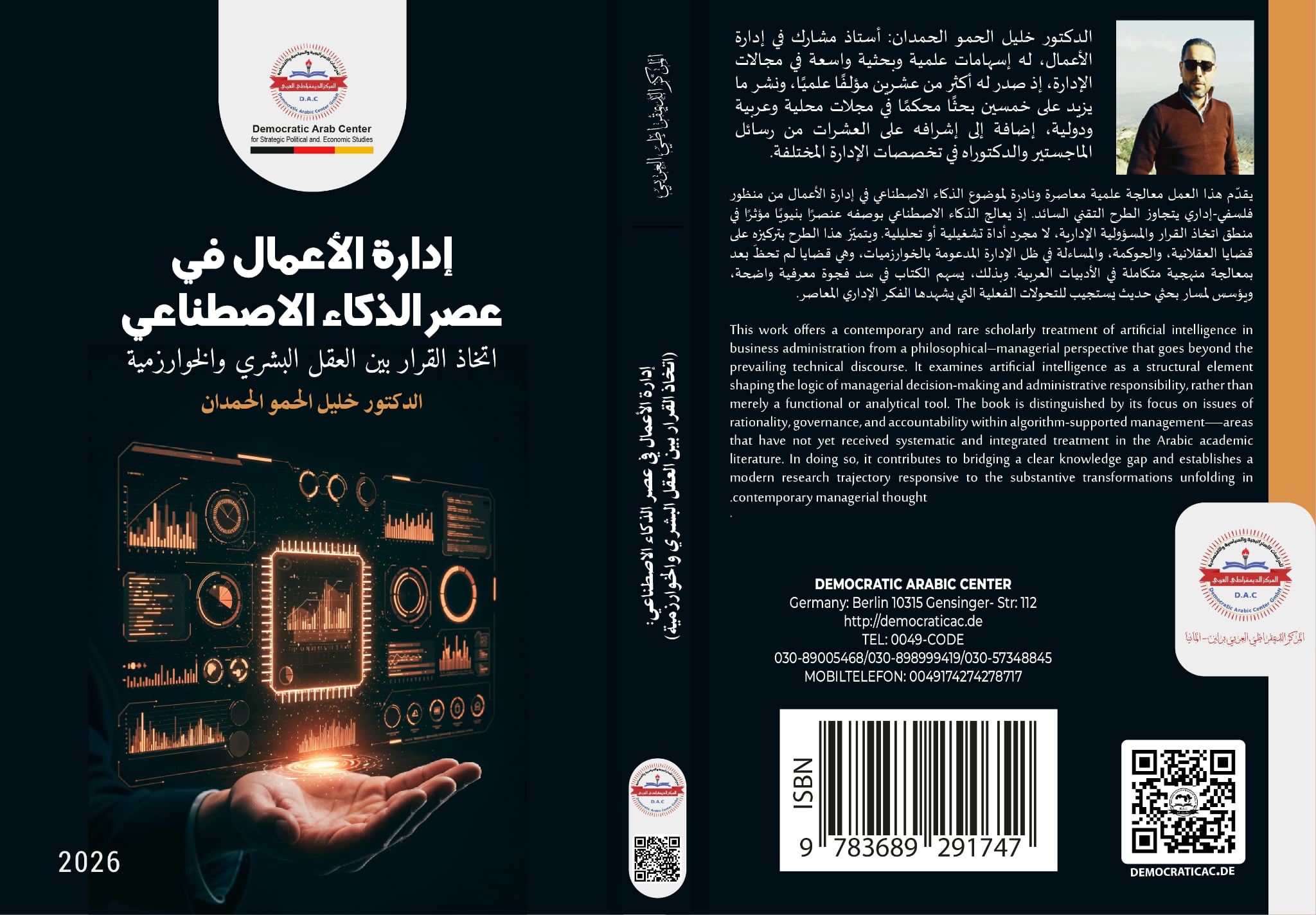
إدارة الأعمال في عصر الذكاء الاصطناعي اتخاذ القرار بين العقل البشري والخوارزمية
Business Administration in the Age of Artificial Intelligence: Decision-Making Between Human Reasoning and Algorithms

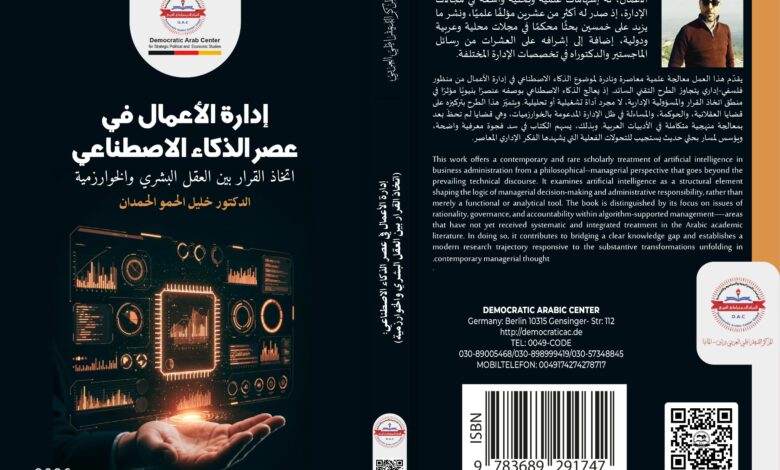
تأليف : د. خليل الحمو الحمدان – إدارة أعمال
نسخة “pdf”-
إدارة الأعمال في عصر الذكاء الاصطناعي اتخاذ القرار بين العقل البشري والخوارزمية
الطبعة الأولى “2026″ –من كتاب : إدارة الأعمال في عصر الذكاء الاصطناعي اتخاذ القرار بين العقل البشري والخوارزمية
جميع حقوق الطبع محفوظة #المركز_الديمقراطي_العربي ولا يسمح بإعادة إصدار هذا الكتاب أو اي جزء منه أو تخزينه في نطاق إستعادة المعلومات أو نقله بأي شكل من الأشكال، دون إذن مسبق خطي من الناشر .
تقديم : –
يتناول هذا الكتاب موضوع الذكاء الاصطناعي في إدارة الأعمال من منظور فلسفي إداري شامل، يهدف إلى تحليل التحولات العميقة التي أحدثتها الأنظمة الذكية في بنية الفكر الإداري، ومنطق اتخاذ القرار، وطبيعة القيادة والتنظيم. وينطلق الكتاب من إدراك أن الذكاء الاصطناعي لم يعد مجرد أداة تقنية مساندة، بل أصبح عنصرًا بنيويًا يعيد تشكيل العقلانية الإدارية، ويطرح تساؤلات جوهرية حول حدود العقل البشري، ومسؤولية القرار، والعلاقة بين الإنسان والخوارزمية.
يعرض الكتاب في فصوله الأولى الإطار المفاهيمي للذكاء الاصطناعي، من خلال تتبع نشأته وتطوره وحدوده، والتمييز المنهجي بينه وبين الأتمتة والتحول الرقمي. كما يناقش دوافع حاجة إدارة الأعمال إلى الذكاء الاصطناعي في ظل تعقّد البيئات التنظيمية وتسارع التغيرات، ويستعرض أنماط استخدامه المختلفة في المنظمات المعاصرة، مع إبراز ما يرافقها من فرص وتحديات.
وفي بُعده الفلسفي، يتناول الكتاب مفهوم العقلانية الإدارية، موضحًا تطورها من التصور الكلاسيكي القائم على الموضوعية والكفاءة إلى الرؤى المعاصرة التي تعترف بحدود العقل البشري وتأثره بالسياق والتحيزات المعرفية. كما يحلل دور المنطق والخبرة والحدس في اتخاذ القرار، ويبيّن كيف يسعى الذكاء الاصطناعي إلى تعويض بعض القصور المعرفي، دون أن يمتلك القدرة على الحكم القيمي أو الفهم السياقي العميق.
ويخصص الكتاب فصلًا مستقلًا لفلسفة البيانات والمعرفة، مبرزًا الفروق الجوهرية بين البيانات والمعلومات والمعرفة، ومناقشًا الكيفية التي تعالج بها الخوارزميات البيانات دون فهم حقيقي لمعناها، وما ينطوي عليه ذلك من مخاطر في حال الاعتماد على المؤشرات الكمية بمعزل عن التفسير الإنساني. كما يبيّن أثر جودة البيانات في رشادة القرار، ويحذّر من النزعة الاختزالية التي تختزل الإدارة في أرقام ونماذج حسابية.
كما يناقش الكتاب الذكاء الاصطناعي في صناعة القرار الإداري، والوظائف الإدارية، والقيادة، والموارد البشرية، مسلطًا الضوء على التحولات التي يشهدها دور المدير والقائد في العصر الذكي. ويتناول الأبعاد الأخلاقية والقانونية لاستخدام الذكاء الاصطناعي، بما في ذلك قضايا التحيز، والعدالة، والشفافية، والمساءلة، والخصوصية، مؤكدًا أن غياب الأطر الأخلاقية والحوكمية يشكل أحد أخطر تحديات الإدارة الخوارزمية.
ويختتم الكتاب باستشراف مستقبل إدارة الأعمال في عصر الذكاء الاصطناعي، مؤكدًا أن المسار الأمثل لا يتمثل في الإحلال الكامل للعقل البشري، ولا في رفض التقنية، بل في بناء نموذج إداري إنساني ذكي يقوم على التكامل الواعي بين الإنسان والآلة. ويخلص إلى أن الذكاء الاصطناعي، مهما بلغت قدراته، يظل أداة داعمة للعقل الإداري، لا بديلًا عنه، وأن جوهر الإدارة سيبقى مرتبطًا بالقيم، والمسؤولية، والحكم الأخلاقي، وهو ما يشكّل أساس الإدارة الرشيدة والمستدامة في المستقبل.
Abstract
This book addresses artificial intelligence in business administration from a comprehensive philosophical–managerial perspective. It aims to analyze the profound transformations brought about by intelligent systems in the structure of managerial thought, decision-making logic, and the nature of leadership and organization. The book is grounded in the recognition that artificial intelligence is no longer merely a supportive technical tool, but has become a structural element that reshapes managerial rationality and raises fundamental questions about the limits of human reason, decision-making responsibility, and the relationship between humans and algorithms.
In its early chapters, the book presents the conceptual framework of artificial intelligence by tracing its origins, evolution, and limitations, and by drawing a methodological distinction between artificial intelligence, automation, and digital transformation. It also discusses the drivers behind the growing need for artificial intelligence in business administration in light of increasingly complex organizational environments and accelerated change, and reviews various patterns of AI use in contemporary organizations, highlighting the opportunities and challenges associated with them.
From a philosophical perspective, the book examines the concept of managerial rationality, explaining its evolution from the classical view based on objectivity and efficiency to contemporary approaches that acknowledge the limits of human cognition and its susceptibility to context and cognitive biases. It also analyzes the roles of logic, experience, and intuition in decision-making, and explains how artificial intelligence seeks to compensate for certain cognitive limitations without possessing the capacity for value-based judgment or deep contextual understanding.
The book devotes a separate chapter to the philosophy of data and knowledge, highlighting the fundamental distinctions between data, information, and knowledge. It discusses how algorithms process data without a genuine understanding of meaning, and the risks involved in relying on quantitative indicators in isolation from human interpretation. It also demonstrates the impact of data quality on decision rationality and warns against reductionist tendencies that reduce management to numbers and computational models.
Furthermore, the book explores the role of artificial intelligence in managerial decision-making, administrative functions, leadership, and human resource management, shedding light on the transformations affecting the role of managers and leaders in the intelligent era. It also addresses the ethical and legal dimensions of artificial intelligence use, including issues of bias, fairness, transparency, accountability, and privacy, emphasizing that the absence of ethical and governance frameworks constitutes one of the most serious challenges of algorithmic management.
The book concludes by envisioning the future of business administration in the age of artificial intelligence, emphasizing that the optimal path lies neither in the complete replacement of human reason nor in the rejection of technology, but in building a humane and intelligent managerial model based on conscious integration between humans and machines. It ultimately concludes that artificial intelligence, regardless of its capabilities, remains a supportive tool for managerial reasoning rather than a substitute for it, and that the essence of management will remain inherently linked to values, responsibility, and ethical judgment—forming the foundation of sound and sustainable management in the future.
الناشر: المركز الديمقراطي العربي للدراسات الإستراتيجية والسياسية والاقتصادية
Democratic Arabic Center- Berlin – Germany